
Grandmaster Flash Battled Mozart At the Fever, and Mozart Got Burned
The Hip Hop/Rap Music and Beatmaking Traditions and Their Theory, and How They Do and Don’t Jive With the Western Classical Music Tradition and Its Theory. Hip hop/rap music and its beatmaking tradition shine their own light; they do not stand in the shadow of the Western classical music tradition.
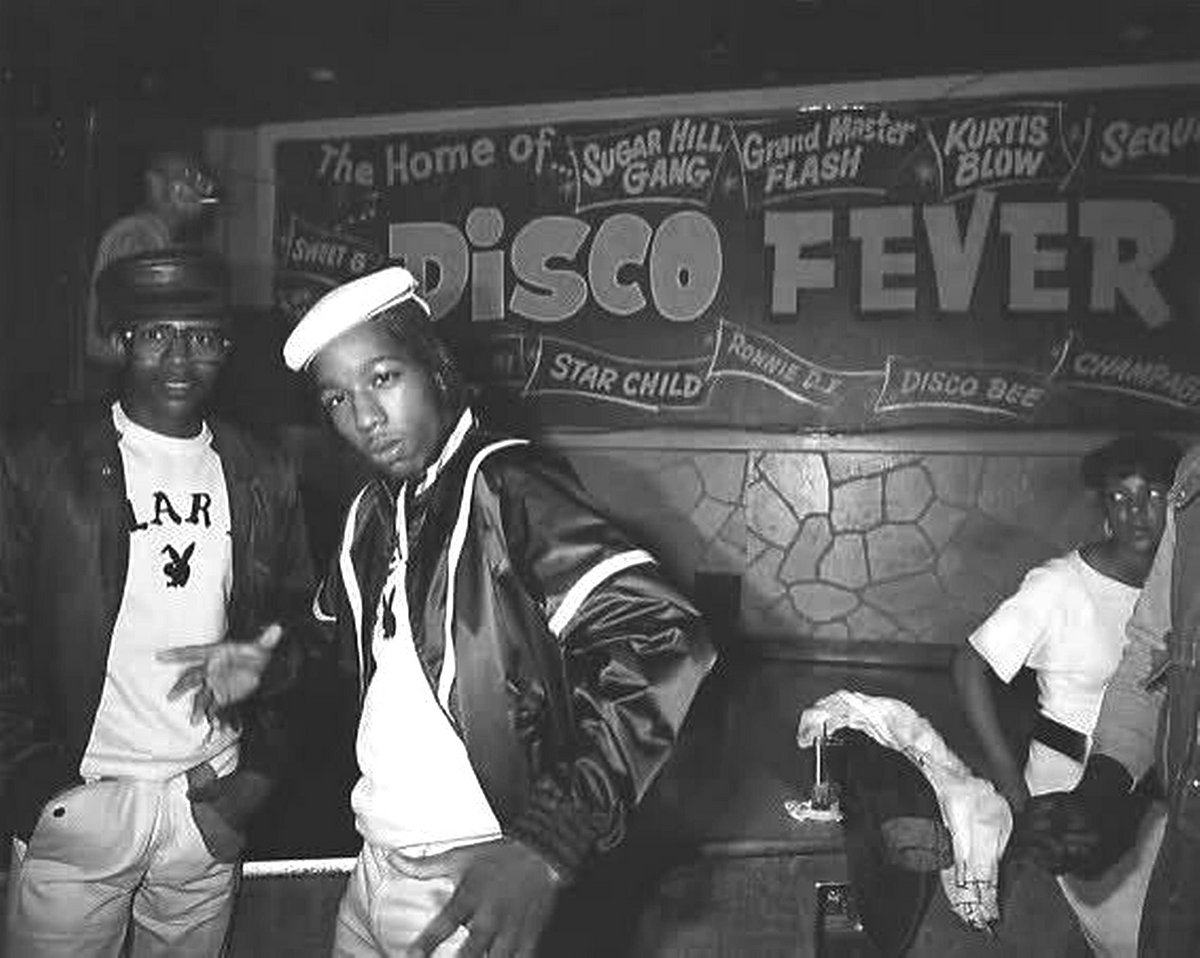
A note about the title of this article:
Battles are an important part of hip hop culture. In hip hop/rap music specifically, head-to-head battles have taken place between rappers, DJs, and crews traditionally at park jams and clubs. The title of this article[1], which pays homage to DJ Grandmaster Flash and the once-popular Bronx nightclub the Disco Fever (a prominent hip hop tent pole from the late ‘70s to the mid-‘90s), is a metaphor. I use it to show that classical music could never beat hip hop/rap music on hip hop’s terms, live in front of a hip hop audience. Point being that hip hop/rap music represents its own music culture and tradition, and it need not be compared to Western classical music, or any other music form for that matter, to be legitimized. Nevertheless, a comparison can tell us much about the compositional process of hip hop/rap music.
For many musicians, music scholars, and music critics in America, Western classical music represents a superior intellectual frontier, while hip hop/rap music represents an inferior horizon. In fact, there are those who don’t even consider hip hop/rap to be music at all. And then there are those who regard hip hop/rap as just a lowly form of music that can only be “elevated” through an extended use of Western music theory and/or the processes and practices associated with rock ‘n’ roll and the like.
Traditional musicians, music scholars, and music critics, who claim (or imply) that hip hop/rap music represents a primitive sphere of music, are completely off base. Whenever this claim is leveled against hip hop/rap music, it’s inevitably leveled from the perspective of music traditions outside of and not closely related to the hip hop/rap music tradition. Therefore, the “primitive” accusation against hip hop/rap is ill-founded and misguided, as it does not account for, nor respect, hip hop/rap music as its own autonomous music culture.
So the aim of this article (and more broadly Chapter 3 of The Art of Sampling, 3rd Edition) is to make four critical points. First, I want to further extend upon the detailed discussion of the beatmaking tradition and how it manifests itself within the broader hip hop/rap music tradition. Here, the ultimate aim is to provide additional evidence that the hip hop/rap and beatmaking traditions are independent, often interdependent, distinct, and both creatively and commercially legitimate music traditions that are worthy of such description. Second, I want to point out how ideological presuppositions about music, in specific, certain ideologies of [about] composition, performance, and authenticity, have driven the dominant culture’s view of what constitutes music and legitimate musical processes. Third, I want to provide further evidence that the beatmaker represents what I call “the common composer”. Fourth, I want to show why it’s impossible to objectively designate one music culture and tradition as superior to another.
The classical music tradition and culture — the pinnacle of musical expression in Western culture — does not subscribe to the fundamental aesthetics, principles, nuances, predilections, presuppositions, predispositions, and priorities of the hip hop/rap music and beatmaking traditions. The presumption that the Western classical tradition is superior to the hip hop/rap and beatmaking traditions is a reflection of the peculiar bias of the dominant culture in Western society, and how that, in reality, it’s not a fair and objective examination of simply another independent and legitimate music tradition and culture.
Although I concede that one might be able to objectively ascertain whether one music tradition and culture contains a more complex series of processes than another, the judgment, support, and criticism of one music tradition and culture over another is entirely subjective and based on one’s familiarity and knowledge of the music traditions and cultures that are being compared. A music tradition is best evaluated (and judged if necessary) by its chief practitioners and constituents, i.e. the community from which it was born, lives in, and functions for. Moreover, the value of a music tradition and culture is determined by the functions it serves for its constituents. If the given functions are met, then the music tradition is thereby considered to be successful in the eyes of the constituents of the encompassing culture. Sure, music traditions and cultures may vary in their compositional processes, principles, properties, practices, and priorities. But no one music tradition and culture can arbitrarily hold more meaning or a level of supremacy over another.
Furthermore, whenever we consider established standards from two separate music traditions, we must remember that our tendency to uphold one standard as superior to the other is always rooted within the philosophical insight — worldview slant — of the dominant culture in which the larger, more extensive standard was formally and firmly codified. In the case of the hip hop/rap music tradition and its own “theory” and the classical tradition and Western (European) music theory, there is no question whether or not music theory is the more extensive, more formally and firmly codified standard. But here, it’s also important to point out that in music, as with all arts and philosophy, whatever the dominant culture deems to be the standard is usually held up as the bar of excellence against which all new standards are measured. Hence, it will ultimately follow that the established standard will then have an air of superiority about it.
Also, we must be mindful that the upholding of Western music theory as the standard set of musical principles of “intelligent”, “great” music serves as insurance against any threat to that very assertion. Therefore, to the gatekeepers of music theory (in Western culture, we don’t even qualify it as Western music theory, we just say “music theory” like it’s the only music theory in the world), the hip hop/rap music and beatmaking traditions, which do not necessarily rely on music theory to the same extent of classical music, can’t simply be different from the Western classical music tradition, they must be considered inferior. As such, it’s more likely that the values and fundamental aesthetic choices of the established standard, in this case Western classical music and its use of music theory, are predictably preferred — without any need for legitimization by members of the established standard culture. And equally predictable, these same members see the values and fundamental aesthetic choices of the hip hop/rap and beatmaking traditions as irrelevant at best, non-existent at worse.
Thus, in any head-to-head comparison of two or more music traditions and cultures, one should expect the host culture and tradition to prevail on its own terms, i.e. its own sensibilities, principles, ideologies, and aesthetic priorities. So following this line of thinking, a head-to-head competition between the Western classical tradition, on its own terms, and the hip hop/rap and beatmaking traditions, the Western classical tradition wins hands down. However, and this is the critical point here, in a head-to-head battle (competition, comparison), on hip hop/rap’s and beatmaking’s own terms, the classical tradition loses.
And it’s important to note that while both traditions are known today, it’s hip hop/rap music that dominates popular music.[2]
Why Compare the Western Classical Music Tradition To the Hip Hop/Rap Music Tradition?
Why unpack the differences between the hip hop/rap music tradition and the Western classical music tradition? First, there’s value in nuance, full stop. We can gain a better understanding of music in general and the processes of creativity by examining two music traditions that are mostly at odds with one another. Second, we can develop better, more accurate criticism for hip hop/rap music’s compositional processes.
Next, every music culture has its own so-called “classical” tradition, that is, a tradition that represents the highest form of musical expression within a given culture. Such a musical expression is predicated upon four fundamental things: (1) A set of well-understood aesthetics, principles, and priorities; (2) A set of distinct and well-defined compositional methods (and approaches); (3) A core philosophical approach to music-making; and (4) A well-recognized canon of works. In Europe and the United States, Western classical music is widely considered to be the highest form of musical expression. And although rock ‘n’ roll may be the most “well-known” popular musical expression in the West, there’s no point in comparing it to hip hop/rap music for two reasons. First, rock ‘n’ roll was also treated like a bastard stepchild of American popular music. Second, rock ‘n’ roll, like hip hop/rap, comes from the Black (African American) music tradition, and therefore, it too does not necessarily subscribe to the compositional ethic of the Western classical tradition.[3]
Finally, it should be noted that hip hop/rap music is American street culture’s “classical” music. So it’s from this vantage point that we must approach hip hop/rap music if we’re truly committed to understanding its full magnificence. Who or whatever you are — rich or poor, traditionally trained or self-taught, from the city or the suburbs — if you want to create quality hip hop/rap music, and I’m not talking about a sham off-shoot or “mash-ups”, then at some point you will have to reconcile your station in life and presuppositions about music with the fact that hip hop/rap music is fundamentally a street culture music.
Does this mean that hip hop/rap music, American street culture’s “classical” music, is exclusively for those who come from the street? No. Hip hop/rap is actually the most inclusive music tradition in the history of American popular music. And I should add that, throughout the world, street culture is perhaps the most inclusive culture within society; membership is not based on one’s acquisition of abstract knowledge, but rather on a sensibility to and knowledge of the ubiquitous “codes” of the street. If you can handle yourself in the streets, regardless of race, ethnicity, or gender, then you’re welcome in the streets. And should you rise up the hierarchy of the street, through mastery of the codes and rules of the streets, then you will be respected.
Much in this same context, the hip hop/rap music and beatmaking traditions do not demand that you pass some bar of abstract knowledge. Moreover, no one is considered privileged or thrusted to the top of hip hop/rap’s and beatmaking’s hierarchy merely because they can play a traditional instrument, read music, or comprehend advanced concepts of music theory. These elements are not prioritized in the hip hop/rap and beatmaking traditions. Instead, the hip hop/rap and beatmaking traditions make one simple demand: That those who participate within these traditions demonstrate a respect and understanding for the fundamental aesthetics, priorities, and unique features of these traditions. So while it’s a fundamentally a street culture music, its barrier to entry is more accessible — to anyone, from anywhere, with any socio-economic background — than the Western Classical music tradition.
In The Art of Sampling, 3rd Edition, I compare and contrast key elements of the Western classical music tradition to those of the hip hop/rap and beatmaking traditions for several other important reasons. First, both musical traditions are on opposite ends of society as well as various spectrums of culture. The western classical music tradition is now widely regarded as high-brow culture, while the hip hop/rap music tradition is broadly considered to be low-brow. Of course, implicit in the notion of high-brow culture is the idea of strong intellectual activity. Likewise, the notion of low-brow culture implies little to no intellectual activity. Second, for hundreds of years, the Western classical music tradition has served as the musical culture par excellence for the Western world, and thus, it has become the supreme musical culture for which, presumably, all musical cultures are measured against. Finally, the third reason I compare and contrast key elements of the Western classical music tradition to those of the hip hop/rap and beatmaking traditions is because Western classical music represents the ultimate manifestation of (Western) music theory.
The number of traditionally trained musicians (and others on the fringe of hip hop culture) moving into hip hop/rap music is always increasing. And paramount to this phenomenon is the fact that, by and large, these musicians bring with them their presuppositions, ideologies, philosophies, and priorities about how to make music and which musical processes are legitimate. And those presuppositions, ideologies, philosophies, and priorities are well-grounded in and guided by the principles of music theory, not the principles of the “hip hop sensibility”[4]. And despite the apparent wishes of some traditionally trained musicians who flirt with the hip hop/rap form, beatmaking is not in need of an increased usage of music theory. This doesn’t mean that the hip hop/rap and beatmaking traditions seek to be at odds with music theory. Hip hop/rap theory uses music theory whenever and however appropriate; likewise, it ignores music theory at will.
My goal is not to malign the magnificence of the Western classical music tradition and/or the brilliance of music theory, but instead to bring attention to and highlight the magnificence of the hip hop/rap music tradition and the brilliance of beatmaking, the chief compositional practice of hip hop/rap music. The hip hop/ rap music tradition is no more or less great than the classical music tradition. As I mentioned earlier, to compare the “relative greatness” of both traditions is actually the wrong analytical approach. Both traditions are rich and hold entirely different meanings and purposes for the communities that enjoy them. But I’m compelled to point out that hip hop/rap music, and the beatmaking tradition that emanates from it, are not orphan music traditions that are in want or need of rescue by any other music tradition. Hip hop/rap music and its beatmaking tradition shine their own light; they do not stand in the shadow of the Western classical music tradition. Hip hop/rap music has its own autonomous tradition and culture. A tradition and culture that contains its own logic and language and vocabulary; its own aesthetics, properties, and principles; its own values and priorities; and its own distinct history.
Notes:
1. Title taken from Chapter 3 of The Art of Sampling, 3rd Edition.
2. It must be distinguished that hip hop/rap is more representative of popular culture, whereas Western classical music is more associated with highbrow or elite culture.
3. Rock ‘n’ roll was once hated by the dominant culture; it wasn’t even considered music at all. It was often described by established musicians and the media as “noise”. And major record companies of the time were reluctant to sign rock ‘n’ roll acts. Within the stark contrast, and in some cases similarities, between the hip hop/rap music tradition and the Western classical music tradition, we see the fundamental parallels that hip hop/rap music has with two of America’s biggest music revolutions: the blues and rock ‘n’ roll.
4. As I describe in Chapter 1 of The Art of Sampling, 3rd Edition the “hip hop sensibility” is a sensibility that highly values and prioritizes competition, individual style, syncretism, a “culture of sampling”, transformation, and the transgression of musical rules. Also, the “hip hop/rap attitude”, which is fundamental to the “hip hop sensibility”, is an attitude that carries a straight-to-the-point music philosophy, an attitude that is decidedly anti-establishment, hyper competitive, in-your-face, and often confrontational. Although competition and individual style exist in some areas of the Western classical music tradition, it certainly doesn’t engross the entire tradition in the way that competition and individual style underscores and engrosses the hip hop/rap music and beatmaking traditions.
